Showing posts with label Business Environment. Show all posts

Thursday, May 9, 2019

Shanghai ready to share benefits of economic development with world

Shanghai has pledged to further open up its door to let the world share the benefits of its high-quality growth.
While delivering the government work report at the annual session of the municipal legislature, Shanghai's Mayor Ying Yong promised that the city will strengthen its efforts in reform and opening-up, while pursuing high-quality growth in 2019.
Shanghai recorded an overall economic growth of 6.6 percent last year, with its GDP per capita exceeding 20,000 U.S. dollars. The city expects to attain a growth rate of 6 percent to 6.5 percent this year.
Healthier economy
The GDP per capita is an important indicator of a region's economic well-being. Its GDP per capita figure has shown that Shanghai's reached a higher level of growth.
Quan Heng, deputy head of the Shanghai Academy of Social Sciences, said as China aims to build itself into a moderately prosperous society by 2020, the growth of GDP per capita is a key measurement.
Quan added that besides per capita GDP, other factors such as economic structure, efficiency and technological innovation are also important indicators of development.
According to the government work report, Shanghai has seen the structure, quality and efficiency of its economy continuing to improve last year. The added value of the tertiary sector accounted for 69.9 percent of the GDP. Total research and development expenditures accounted for four percent of the city's GDP.
The city has been boosting its real economy, with industrial investment increasing by 17.7 percent in 2018, the greatest growth rate the city has seen during the past decade. It recorded around a 10-percent growth rate in the output of emerging industries including new energy cars, high-end medical equipment, integrated circuits and biomedicine.
The city vows to further promote high-quality growth this year. It will deepen supply-side structural reform and advance the construction of a modern industrial system featuring modern services, strategic emerging industries and advanced manufacturing.
The city will further boost its science and innovation sector and fortify its function as an international financial, trade and shipping center.
Meanwhile, Shanghai will further upgrade the real economy and come up with supporting policies for industries including integrated circuits, artificial intelligence and biomedicine.
The city will push ahead with industrial innovation projects such as intelligent connected vehicles, and it expects to see the mass production of 14 nanometer-integrated circuits this year.
Opening-up measures
The development of the Shanghai free trade zone (FTZ) is expecting new momentum, as a new section will be built this year. Policies and systems will also be adopted in alignment with international norms to upgrade the FTZ, said Shanghai's mayor.
A science and technology innovation board will be set up with a pilot registration system for listed companies in the Shanghai Stock Exchange, said the report.
The city will further improve the private investment environment. In an effort to ease enterprises' access to market and financing, the city has vowed to put into good use a bailout fund worth 10 billion yuan (1.48 billion U.S. dollars) for listed companies.
It will channel 10 billion yuan of credit and secured loans to high-quality small and medium private companies.
It will also gradually increase the size of policy-based financing guarantee funds for medium, small and micro enterprises to 10 billion yuan.
At the same time, Shanghai is actively participating in the integrated development of the Yangtze River Delta region.
This year, the city will cooperate with its partners in constructing programs in infrastructure, scientific innovation, industrial collaboration, environment and market systems, the mayor said.
Cooperation mechanisms will be further improved in public services such as pension service, medical and health services, human resources and social welfare.
The second import expo
Shanghai is determined to host the second China International Import Expo (CIIE) this year and make it another success, according to the mayor.
The city will normalize the expo's pilot mode of bonded display and trade, hosting it on a regular basis.
As the world's first import-themed national-level expo, the first CIIE was held in Shanghai from Nov. 5-10 in 2018 and concluded with deals worth about 57.83 billion U.S. dollars. The expo attracted 3,617 foreign exhibitors and more than 400,000 buyers from home and abroad.
Ying, the mayor said the city plans to open wider for foreign investment and foreign firms, amplifying the expo's spillover effects.
According to the CIIE bureau, more than 500 companies from more than 40 countries and regions have confirmed participation in the 2019 CIIE. Among them, over 70 are Fortune Global 500 firms and leading enterprises in various industries.

Shanghai attains developed economy status, on track to become global financial center

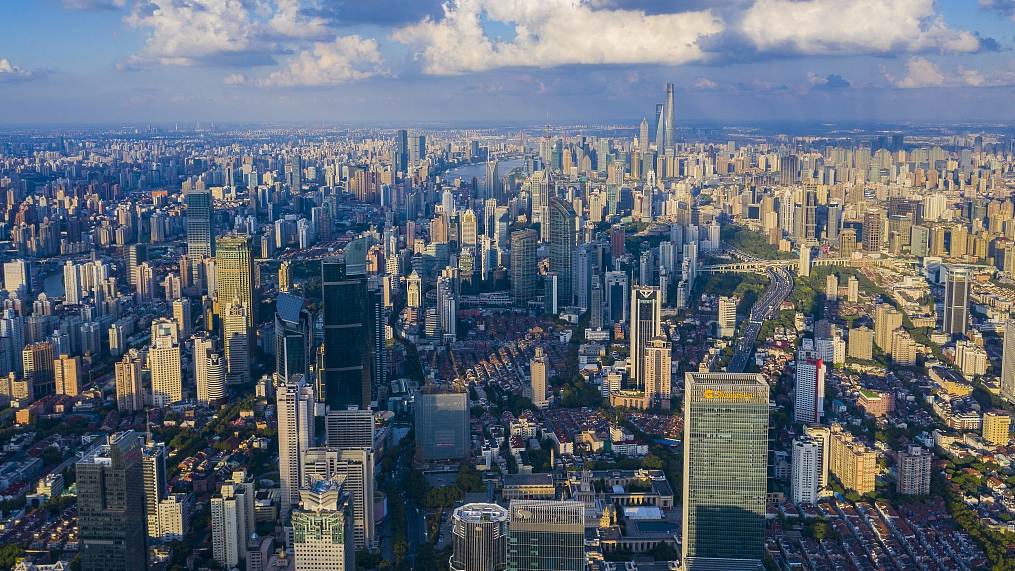
Skyline of Shanghai File photo: VCG
Shanghai's per capita GDP, a broad measure of living standards, reached 135,000 yuan ($20,136) in 2018, exceeding the threshold ($20,000) of a developed economy for the first time, according to figures released by the Shanghai Municipal Statistics Bureau over the weekend.

Experts said the figure shows that Shanghai's social development is close to that of developed areas, and the city, with the central government's policy support as well as resilience in its economy, is expected to rise as a global financial center.

"Amid China's efforts to shift from quantity-led to quality-driven growth in the past several years, the city still recorded steady gains in both economic growth and overall social well-being," Liu Xuezhi, a senior expert in macroeconomics at the Bank of Communications, told the Global Times on Sunday.

The city's GDP stood at 3.27 trillion yuan ($480 billion) in 2018, surpassing Thailand's 2017 GDP of $455 billion. Thailand is the eighth-largest economy in Asia. 

Overall, its GDP grew 6.6 percent in 2018, compared with 6.9 percent in 2017, while keeping pace with China's 6.6-percent GDP growth.

Liu noted that besides per capita GDP, other factors such as the city's economic structure, efficiency and technological innovation are also important indicators of development. The increasing share of the tertiary industry in Shanghai's economy also shows a high-quality growth trend.

The tertiary sector was the largest contributor to the city's GDP last year, accounting for 69.9 percent of the total. Value added in the primary industry sector dropped 6.9 percent, while growth in secondary industry was 1.8 percent and the growth in tertiary industry was 8.7 percent, according to the municipal statistics bureau.

Financial center

The city also aims to become a global financial center by promoting reform and innovation in the financial sector, attracting top talent, and optimizing the legal environment in line with international rules, according to experts.

"Basic infrastructure facilities in Shanghai are already enough for it to become a financial center. But its soft power, including  attractiveness to talent and foreign capital, still lags behind major global financial centers like New York and London. These are areas where Shanghai really needs to catch up," an industry observer surnamed Dong told the Global Times on Sunday.

As of the end of April 2018, total assets of foreign banks in Shanghai reached 1.5 trillion yuan, accounting for 10.3 percent of total assets of Shanghai's banking institutions, according to the Xinhua News Agency.

"Unlike other financial centers, high-end manufacturing, such as shipbuilding, still accounts for a large share of Shanghai's GDP. This could help it better confront financial risks in the future," Dong said.

Dong said that although Shanghai's GDP is leading Chinese cities, its per capita GDP is still lower than expected when compared with its domestic counterparts, and there's much scope for growth.

According to a report from Yicai.com on Sunday, Shanghai is not the first Chinese city to move into the developed economy club in terms of per capita GDP. So far, 15 Chinese cities have achieved per capita GDP figures in excess of $20,000.

Shenzhen in South China's Guangdong Province ranked top in the list with per capita GDP of 193,338 yuan, and Hangzhou in East China's Zhejiang Province (at 142,683 yuan) and Nanjing in East China's Jiangsu Province (at 153,814 yuan) had higher per capita GDP figures than Shanghai.


By Shen Weiduo Source:Global Times Published: 2019/3/3 21:03:40

Shanghai first Chinese city to top 3 trillion yuan GDP


By Zhou Wenting in Shanghai | China Daily | Updated: 2018-01-20 09:42
Skyscrapers are reflected in a puddle of water in the early morning at the Bund in Shanghai, Oct 20, 2015.[Photo/Xinhua]
Shanghai became the first city in China, the world's second-­largest economy, to top GDP of 3 trillion yuan ($469 billion) and achieved higher-than-­expected growth last year, official data revealed on Friday.
The municipality achieved 3.01 trillion yuan in GDP in 2017, for year-­on-­year GDP growth of 6.9 percent, which corresponded with that of the previous year and last year's national average, according to the Shanghai Municipal Statistics Bureau.
"As an early bird of the nation's economic restructuring, such figures embody the standard and quality of Shanghai's steady economic growth, as well as its role in leading, radiating and driving the development of the Yangtze River Delta and its surrounding areas," said Tang Huihao, the bureau director.
"Reaching 3 trillion yuan marked a significant milestone and a new starting point, from which we will pursue high­-quality development and elevate the core competitiveness of economic growth to achieve stable, healthy and sustainable development," he said.
The growth seen last year was partly driven by the coordinated development of the manufacturing and service industries, for which growth came in at 5.8 percent and 7.5 percent, respectively.
"Industrial production recorded its fastest growth since 2011 and the industries of high-­tech manufacturing and strategic emerging manufacturing manifested eye-­catching growth," Tang said.
Both production and sales of new energy vehicles soared, with gross industrial output increasing by 42.6 percent over the previous year. Tang attributed the upswing mainly to the government's green car subsidies, favorable license policies and a small original market size.
Manufacturing of medical equipment increased 11.2 percent year-­on-­year, which was also remarkable, Tang said. "A large number of innovative pieces of medical equipment emerged last year, breaking the monopoly of imports from foreign countries."
Sun Lijian, an economics professor at Shanghai­-based Fudan University, said such strong figures showed the city's powerful economic development momentum, under both the influence of the visible hand of the government and the invisible hand of the market from supply-­side structural reform.
"I also hope Shanghai can lead the country in exploring a successful model of the government and the market exerting a synergetic influence to create more products and services that the public will not only applaud but also buy," he said.
The city's statistics bureau said the real estate market in Shanghai had cooled last year and prices remained stable thanks to precise regulation. Real estate development investment growth in 2017 was 2.9 percentage points lower than in 2016, with market turnover shrinking as well.

Wednesday, May 8, 2019

Targets help for foreign enterprises in Shanghai

To speed up project completion has always been a key task for the local administrative examination and approval office. The authority has carried out four rounds of reforms to optimize the investment system and reduce approval management issues for construction projects, Jin Yueming, deputy director of the Shanghai Office of Agency and Staffing Committee said.
 
The Shanghai government has worked hard to improve the business operating climate for enterprises by unveiling targeted policies and measures, improving its work efficiency and providing accurate services, local officials said yesterday.
 
Meanwhile, the government has been exploring new and innovative initiatives to quicken project completion by implementing special reform pilot programs in the original comprehensive bonded zone, the Expo park, chemical industry zones and Fengxian District, and then promote and replicate successful experiences to other areas in the city.
 
In 2017, Shanghai revised and optimized its project administrative examination and approval processes and introduced a new administration program for enterprises that invest in technology transformation projects.
 
Through those reforms, the time for administrative examination and the approval of industrial projects has been trimmed by one third compared with the stipulated time, with the time required for some projects reduced by as much as half.
 
In the past year, the city also made reforms to boost its work efficiency by providing spot responsive servicing. The policy requires that administrative departments should help resolve problems from the public on the spot, as long as they can make a quick decision.
So far, over 20,000 requests have received spot responses, the government said.

Why Set Up Business in Shanghai mainland China

First, description business and foreign invesment environment in Shanghai China 
 
Shanghai is the the most popular China city for non residents and foreign business entities and as the largest foreign consumer market among all mainland Chinese cities, Shanghai as a international metropolis that it supported by the rising income level and huge inflow of tourists. Also considered Chinese largest financial, shipping and trading center with over 1,430 financial institutions, including banks, insurance companies and securities companies, of which 20% were foreign-invested.
 
As it's known to us all facing the opportunities and challenges of the 21st century, Shanghai has set its long-term strategic objectives for social and economic development which comes from its diverse economic base. 
 
Major industry networks include: electronics, communications and the information industry, biomedicine, auto manufacturing, petroleum, sophisticated chemical and steel manufacturing, complete-set equipment manufacturing, finance, insurance, real estate, household electrical appliances, retail and whloesale and etc. 
 
 
Shanghai Company Formation
is the fastest city all over the China. Fdifirm foreign enterprises registry center offers to our customers from all over the world for Shanghai Company Registration and CPA service solutions, and help clients registering an Wholly Foreign Owned Enterprise( WFOE ), Joint Ventures or domestic companies in Shanghai's areas, and Fdifirm can also provides the virtual registered address ( non real office ) in any areas and districts in Shanghai.
 
why company registration in Shanghai
 
Key Point of Registration in Shanghai 
1. No real office needed
2. No registered capital required
3. No need to be at presence in China
4. Set-up in 12 working days
 
Wholly Foreign Owned Enterprise in Shanghai
 
WFOE is that the entity is 100% owned, capitalized, and operated by foreign investors without the help of a local partner. A WFOE allows you to maintain greater control over your business operations, and revenue targets. In addition, a WFOE is the favorable choice for an overseas company that wants to permanently incorporate into mainland Shanghai.

Entrepreneurial Environment and Magnetic of Shanghai

According to a report called "This 456 is marvelous - Internal and external linkage to release Shanghai magnetic force"published by Xinhua news agency Shanghai, 21th April 2019.
 
entrepreneurial environment
 
So what is the meaning of 456? Hexiyue and Chensiqi who are the journalists of the Xinhua News Agency, said.
 
- 4, means, the world's top scientific research forces are clustered together in Shanghai China, and a total of 444 foreign R&D ( research and development ) centers have established their own technology service sectors here.
 
- 5, means, the pace of foreign-funded enterprises settling in China was accelerated over the past years, and as the most popular international city, Shanghai has more than 50,000 foreign enterprise, companies, representative offices here.
 
- 6, means, the level of foreign investment institutions keeps improving, and the headquarters of multinational companies has reached 677. Is our country inland foreign capital headquarters type organization most city.

Shanghai businesses
 
In the latest data released by the Shanghai municipal government, this series of "456" Numbers is very impressive, which is a strong evidence of the continuous update and development of open highland Shanghai. The charm of "magic city" is not only the broad sky and sea open to the frontier, but also the "Shanghai magnetic force" constantly released by internal and external linkage.
 
Foreign investment into the fast lane
 
More than 50,000 foreign-funded enterprises have settled in Shanghai, a number that is still growing rapidly. In the first two months of this year, contracted foreign capital and paid-in foreign capital in Shanghai increased by 58.6 percent and 14.3 percent respectively.
 
In the field of robot manufacturing, which has attracted worldwide attention, there have been a lot of bright spots in Shanghai recently. Robot giant fanuc announced on April 4 that it will build a new "super smart factory" in baoshan, Shanghai, with a total investment of about 1.5 billion yuan, which will become its largest robot production base in the world outside Japan. Another giant, ABB, said it would invest $150 million to build a world-leading super robot factory in Shanghai's kangqiao, which is expected to be operational by the end of 2020.

foreign investment
 
Three of the world's four robot families are already in Shanghai, a rarity.
At the beginning of this year, the construction of tesla's first overseas super factory was officially started in lingang, Shanghai, which is the first wholly foreign-owned project in China's new energy vehicle sector after the opening of foreign ownership. When he signed the contract, took the land and launched the car, tesla CEO elon musk said, "this is China's speed, Shanghai's speed!"
Recently, a number of major foreign projects are about to start in Shanghai, including the us $1 billion invid adiponitrile project and the RMB 3 billion Siemens diagnostic plant. These projects not only have a large amount of investment and high level, but also represent the leading scientific and technological level of various industries in the world.
 
Research and development linkage forms innovation resultant force
 
Open the door to the outside, the internal connectivity and interaction. The opening of 444 foreign-funded research and development centers has led to exponential growth in innovation momentum and joint efforts by Chinese and foreign researchers.
 
The 66,000 square meter natural peninsula in the core area of zhangjiang science city, pudong new area, Shanghai, once swaying with withered reed and overgrown with vegetation, is now becoming a "testing ground" for artificial intelligence. International technology giants such as Microsoft, IBM and infineon have entered the peninsula one after another, and new domestic forces such as cloud technology and ant technology are also emerging.
Microsoft's artificial intelligence and Internet of things lab, one of the "islanders" on the artificial intelligence island, recently announced the opening of the "first batch of intention to recruit enterprises".
 
Using the platform of Shanghai, we can not only introduce China's advantageous products and technologies to the world, but also bring the world's advanced technologies and concepts to China. "Said hong xiaowen, senior vice President of Microsoft worldwide and President of Microsoft research Asia.
 
In the second quarter of this year, JLABS, a start-up incubator in Shanghai, China, will open its operation in Shanghai zhangjiang high-tech park. As the first JLABS for Johnson & Johnson innovation outside of North America, it will support nearly 50 life science startups in the healthcare ecosystem.
 
"China, especially Shanghai, has become a global health innovation hotspot". Meng qiming, chairman of Johnson & Johnson China, said JLABS will work with multiple organizations to create an innovation hub centered in Shanghai.
 
"Foreign r&d has gone through a process from applied r&d to independent r&d and then to open innovation, which has played a very important role in driving local innovation." Shanghai commerce committee deputy director Yang chao concluded.

magnetic of Shanghai
 
Level upgrade common radiation Yangtze river delta
 
With the gathering of 677 headquarters of multinational companies, the number of foreign capital stationed in Shanghai is increasing. The structure of foreign capital utilization in Shanghai is also improving and its level is improving. Many enterprises recently revealed that foreign capital love Shanghai, but also love here to be able to linkage of the broad market and unlimited opportunities.
 
"When we are in Shanghai, we are looking at the mature business environment in Shanghai and the sound ecosystem in Shanghai and even the Yangtze river delta region, with good development in manufacturing, medicine, finance and other aspects." "We hope Microsoft can achieve a deep and organic combination with Shanghai, the Yangtze river delta and China," Mr. Hong said.
 
According to the latest data released by Shanghai municipal government, foreign-funded enterprises account for about 2% of the city's enterprises, contributing 20% of the city's employment, 27% of its GDP, 33% of its tax revenue and 60% of its total industrial output. In the future, foreign-funded enterprises can not only deeply participate in the construction of Shanghai science and innovation center, but also have the opportunity to participate in the construction of G60 science and innovation corridor in the Yangtze river delta.
 
In the G60 technology innovation corridor planning exhibition hall located in songjiang, Shanghai, the brush robot launched by evert intelligent equipment co., ltd. from the Yangtze river delta is writing "liberating human productivity" with beautiful strokes. In the nearby town of xiaokunshan in songjiang, Shanghai, wang jiangbing, CEO of kuka China, spoke about kuka's strong desire to collaborate with the robotics industry in the Yangtze river delta.
 
"There are many domestic and foreign customers and suppliers in Shanghai and the surrounding Yangtze river delta. If you settle here, you can enjoy the 'right place, right time'. The product delivery cycle is short and the cost is advantageous. Wang jiangbing said that China is growing into the world's largest industrial robot market, and the Shanghai government's willingness to meet its demands has given them confidence. He said that in the future, the government is expected to build a platform to cooperate with counterparts in the Yangtze river delta region to jointly improve industrial standards and bring Chinese robot manufacturing to a higher level.
 
Reported by Xinhua news.

The insider’s startup guide to Shanghai

Editor’s note: This was contributed by Rachel Daydou. She has lived in China for 7 years and has been evolving in the Shanghai startup scene for 3, as co-founder of Lihaoma, managing member of Startup Grind Shanghai and leader of Shanghai University’s entrepreneurship program. She specializes in training programs for founders to make their startup profitable.
With money getting thrown at innovative initiatives, the government willing to reimburse venture capitalists for their loss and the eco system maturing as a whole, Shanghai is starting to look like the entrepreneur’s heaven.
WechatIMG90
Wantentrepeneurs, incubators and co-working spaces are growing like mushrooms. Being an entrepreneur is the dopest thing you can wish for in this booming city. But it takes much more than that to develop a mature startup ecosystem and build sustainable companies.
We have compiled a list of resources beyond co-working spaces and venture capitalist funds. But first, ask yourself those four questions in order to find out WHICH support is most suitable for you.
  1. What’s the founding team nationality, core competence, and commitment?
  2. What’s your company stage?
  3. What are your immediate needs?
  4. What do you want to achieve in the next six months?
Now that you have answered these questions, here is a curated list of support for foreign entrepreneurs in Shanghai.
  1. WechatIMG91TRAINING – Step up your game in the long term without giving away equity
University coursesUTSEUSNYUEMLyonHULT
MOOCsDigital Innovation by Telecom Paris Tech, Digital Marketing in China by Xnode, Koudetatby the Family
WechatIMG92
  1. COMMUNITIES – Great to share tips, tools and find business opportunities
Fablabs & HackerspaceXinCheJianFablaboXinFab
WechatIMG93
  1. SERVICES – From office to hiring we need services catered to startups
HiringQLCLe WagonCoderBunker
WechatIMG96
  1. INVESTMENT + VISIBILITY – Raise and learn how to sell
Picture1
  1. EVENTS – Meet your co-founder, first employee or advisor
WechatIMG94
  1. INSPIRATION – Get going and keep going when it gets tough (i.e. all the time)
VideosTed Talks
Entrepreneur Blogs & MagazinesTechnode
WechatIMG95
  1. INVESTMENT – If you’re building the next unicorn
Private Funds incubators: Caohejing InnoclubtheXnodeQiaoLabistartvc
Foreign friendly Investment funds: Sequoia Capital, Mailman GroupShanghaiVestZhenFund
Angels: AngelVest
Contributors: Adja Sy, Sylvain Joandel, Debo Omololu, Stephane Monsallier, Ryan J. King, Erik Walenza-Slabe, Stephane Vernede.

NB: this guide is tailored to foreign founders of Chinese and foreign companies alike. We have curated the support most actionable for you, particularly on the investment side because we know it’s tough for foreign founders to raise from purely Chinese funds.