Showing posts with label Industry. Show all posts

Thursday, May 9, 2019

Lujiazui targets becoming high-end financial leasing hub

1a.jpg
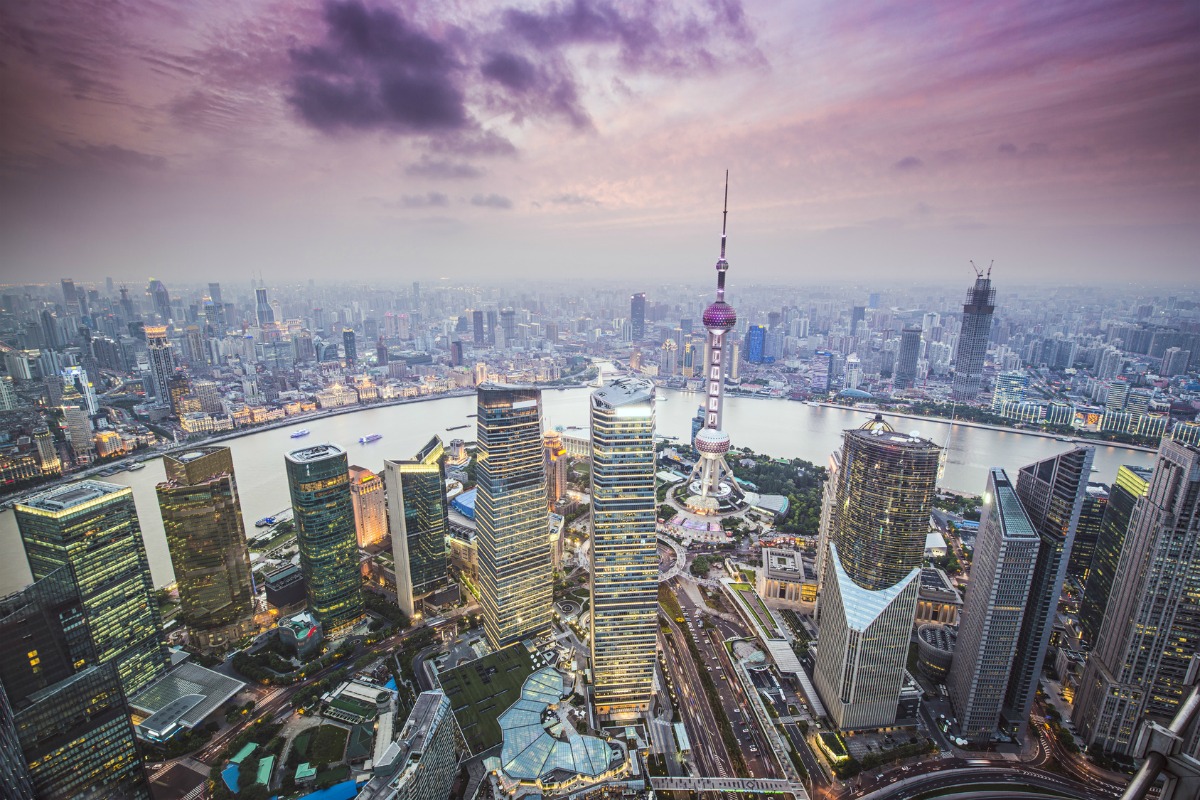
Dawn breaks over Lujiazui Financial District in Shanghai on March 7, 2017. [Photo/VCG]
Lujiazui, Shanghai's financial city, is ambitious to become a high-end financial leasing hub by improving its services and supporting its facilities and business environment.
The area, with an abundance of financial market factors and financial infrastructure such as licensed institutions and professionals, is driving development of the financial leasing industry.
Ping An International Financial Leasing Co, located in Lujiazui, has become an industry leader with only six years of development. Its total assets exceed 230 billion yuan ($33.34 billion).
Li Wenyi, the company's deputy general manager, considers that its rapid development can largely be attributed to Lujiazui's good business environment.
Li spoke highly of Lujiazui's fundraising environment for the financial leasing industry and said that it is easy for the company to integrate various financial resources.
Lujiazui is home to 13 state-level factor markets, 850 licensed financial institutions accounting for 60 percent of the city's total, 19 foreign-funded banks such as HSBC and Citibank, 6,000 emerging financial institutions, and over 3,000 professional service agencies.
Authorities at the Lujiazui Management Bureau say that the area is working hard to reach its goal of becoming a high-end financial leasing hub.
It hopes to be the home of the China Financial Leasing Industry Association, which is still in the planning stage but is expected to strengthen the industry's discipline and promote its healthy development.
Lujiazui also joins hands with industry organizations and third-party institutions to organize forums and symposiums, and supports training programs for financial leasing brokers.
It is guiding local state-owned enterprises and social capital sources to set up a financial leasing industry fund to help small and medium-sized enterprises solve fundraising difficulties.
Moreover, it gives financial support to leading financial leasing companies to encourage them to build professional service platforms, and has encouraged the Shanghai United Assets and Equity Exchange to cooperate with related institutions to build a trading platform.
Thanks to those measures, Lujiazui has attracted over 200 financial leasing enterprises and nearly 1 trillion yuan. Five of those companies have assets exceeding 100 billion yuan, and three rank among China's top 10 financial leasing companies.

Tuesday, May 7, 2019

Brief Introduction To Key Industries In Shanghai,Incorporate Business,Company Registration,Corporate Formation In Shanghai

Overview


As an international metropolis, Shanghai has played an important role in China’s national economic and social development, shouldering the responsibility of promoting integration within the Yangtze River Delta area and the development of the Yangtze River Economic Belt. Occupying only 0.06 percent of the national territory, the city boasts 3.7 percent of the state’s gross domestic production.
Shanghai has proactively followed the national strategy to facilitate steady growth, reform, restructuring, social welfare and risk prevention. In 2015, the GDP per capita in Shanghai hit $16,560, 5.5 percent higher than 2014, to reach the level of moderately developed countries and regions of the world. The fiscal revenue reached 551.95 billion, up 13.3 percent.
Shanghai has also continued to facilitate the restructuring of industry and transformation of economic development models. So far, Shanghai has formed a service economy-based industrial structure, with tertiary industries accounting for 67.8 percent of the city’s GDP. The ratio of primary, secondary and tertiary industries in the city is 0.4 versus 31.8 versus 67.8.
Shanghai has accelerated fostering the “new economy”, which features new technologies, new industries, new models and new business patterns. Emerging industries, including robotics, 3D printing, cloud computing and Internet of Vehicles, have enjoyed fast development. The government has provided a sound environment for innovation and entrepreneurship. The non-state-owned economy continues to grow, with its added value hitting 1.29 trillion yuan in 2015, up 6.7 percent compared with 2014.

Service sector


The modern service industry sector enjoyed fast development in Shanghai in 2015. The added value of the city’s information services industry totaled 137.45 billion yuan, up 12.0 percent from 2014. Emerging industries also showed sound development, with added value accounting for 15 percent of the whole city. The sales volume of non-store retailing reached 125.06 billion yuan, 26.9 percent higher than 2014 and accounting for 12.4 percent of total retail sales of consumer goods in the city.
Transportation
As a national transportation hub, Shanghai completed the transportation of 912.39 tons of cargo in 2015. The total number of passenger transportation reached 185.71 million, 7.9 percent higher than 2014.
The number of flights departing and arriving at Shanghai Pudong and Hongqiao airports totaled 705,800, up 7.7 percent compared with 2014. The number of passengers inbound and outbound reached 99.19 million, 10.6 percent higher than 2014.
In 2015, the city optimized 280 bus routes and added 40 kilometers of metro lines. The total length of metro lines in the city has reached 617.53 kilometers.
Post and telecommunication
In 2015, the total volume of postal and telecommunication businesses totaled 3.86 billion yuan and 78.03 billion yuan respectively, 24.2 percent and 30.5 percent higher than 2014.
As of the end of 2015, the number of fixed-line telephone users in Shanghai reached 7.93 million. The number of mobile phone users reached 32.6 million, 22.1 million of whom were 3G and 4G users.
Retail
In 2015, the total commodity sales volume reached 9.34 trillion yuan, up 6.4 percent compared with 2014. The total retail sales volume of consumer goods exceeded 1 trillion yuan, with a growth of 8.1 percent compared with 2014. Online retail sales reached a volume of 109.14 million yuan, up 31.6 percent compared with 2014 and accounting for 10.9 percent of the total retail sales of consumer goods.
Finance
Shanghai has strived to construct an international financial center with a cluster of financial institutions offering services in stocks, bonds, insurance and futures. In 2015, the added value of Shanghai’s financial industry totaled 405.22 billion yuan, up 22.9 percent compared with 2014.
As of 2015, the total number of financial institutions in the city reached 1,430, including 618 for monetary financial services, 350 for capital market services and 382 institutions in the insurance sector. The number of foreign-funded for-profit financial institutions totaled 230.
Real estate
Total property investment in Shanghai reached 346.89 billion yuan in 2015, 8.2 percent higher than 2014. The total construction area of commodity housing reached 150.95 million square meters. The sold floor area of commodity housing reached 24.31 million square meters, up 16.6 percent from 2014.
Port
In 2015, the cargo throughput of Shanghai port reached 717.4 million tons and the international container throughput reached 36.54 million twenty-foot equivalent units (TEU), ranking first among global ports for a sixth consecutive year.
As of 2015, Shanghai has established relationship with 23 cities around the world, including Osaka and Yokohama of Japan, Seattle, New Orleans, New York and New Jersey of the US, Antwerp of Belgium and Marseille of France.
MICE industry
In 2015 the city held 851 fairs and exhibitions, with a total display area of 15.13 million square meters, up 22 percent compared with 2014. 292 among them were international exhibitions.

Industrial sector


In 2015, Shanghai’s industrial added value and gross industrial output value totaled 710.994 billion yuan and 3.1 trillion yuan, up a respective 0.5 percent and down 0.8 percent compared with 2014.
Key industries
Digital information, automobiles, petrochemicals and fine chemical engineering, high-end steel, equipment manufacturing and bio-pharm are the six key industries of Shanghai. The total industrial output value of these six industries totaled 2.08 trillion yuan in 2015, accounting for 66.9 percent of the city’s gross output value of above-scale industries.
Strategic emerging industries
In 2015, the city’s strategic emerging industries, including energy conservation and environmental protection, new information technology, bio-pharm, high-end equipment, new energy, new material and new-energy vehicles, reached a total industrial output value of 806.41 billion yuan, accounting for 26 percent of city’s gross output value of above-scale industries. Among them, the new energy, bio-pharm and new-energy vehicles industries enjoyed fast development, with growth rates of 4.6 percent, 2 percent and 31.5 percent respectively.
Industrial products output
The sales rate of the city’s above-scale industrial products reached 99.5 percent in 2015. Major industrial products such as processed crude oil, industrial robots, mobile phones and automobiles enjoyed a fast output growth.
Output and year-on-year growth rate of major industrial products in Shanghai in 2015
QQ截图20170208105930.jpg


Agriculture


Shanghai’s new rural construction has achieved great progress by improving agricultural productivity, increasing farmers’ income and promoting rural development. In 2015, the added value of agricultural output in Shanghai totaled 10.98 billion yuan, down 13.2 percent compared with 2014. The gross value of agricultural output reached 28.78 billion yuan, down 12.7 percent compared with 2014.
Agricultural products
Shanghai has strived to develop brand agricultural products. By the end of 2015, Shanghai has 1,631 agricultural companies, 191 with green food production permit. The gross export value of primary agricultural products totaled 1.08 billion yuan in 2015. Products including vegetable, flower, fruit and aquatic products have been exported to countries such as Japan, South Korea, US, as well as Southeast Asia and Europe.
agri.jpg
Modern agriculture
By the end of 2015, the total power of agricultural machinery amounted to 1.19 million kilowatt. Shanghai had 150 standard vegetable farms, 317 livestock and poultry farms and 270 aquatic farms. A total of 387 companies in the city has been entitled as “leading agricultural industrialization companies”.

To facilitate people who want to set up company to invest Shanghai, here is an introduction of Types of business presence in China: 

Before starting up a business in China, you have to know what are the options. Foreign Investors generally establish a business presence in China in one of five modes: Wholly Foreign Owned Enterprise(WFOE); Representative Office; Foreign Invested Partnership Enterprises (FIPE); Joint Venture and Hong Kong Holding Company.

Wholly Foreign Owned Enterprise(WFOE) is a Limited liability company wholly owned by the foreign investor. WFOE requires no registered capital and it's liability of equity , can generate income, pay tax in China and it's profit could be repatriate back to investor's home country. Any enterprise in China which is 100 percent owned by a foreign company or companies can be called as WFOE.

Representative Office (RO) is a Liaison Office of it's parent company. It requires no registered capital. It's activities would be: product or service promotion, market research of it's parent company's business, Quality Control liaison office etc in China. RO generally is prohibited to generate any revenue nor generating contracts with local businesses in China.

Joint Venture (JV) is aLimited liability company formed between Chinese investor and Foreign investor. The parties agree to create a entity by both contributing equity, and they then share in the revenues, expenses, and control of the enterprise. JV usually been used by foreign investor to engage the so called restricted in areas such like: Education, Mining, Hospital etc.

Since March 1, 2010: Measuresof Establishment of Foreign Invested Partnership Enterprises (FIPE) in China istaking effect. The regulation, which take effect since March 1, 2010, are known as the Administrative Measures for the Establishment of Partnership Enterprise in China by Foreign Enterprises or Individuals. There's no required minimum registered capital for a Foreign Invested Partnership Enterprise (FIPE) in Shanghai, Beijing, Shanghai, Shenzhen, Hangzhou and rest cities of China

Hong Kong Company usually been used as a Special Purpose vehicle (SPV) to invest Mainland China. Hong Kong is one of the quickest locations to Incorporate a business. Although a HK company is not a legal entity in Mainland China (Mainland China and Hong Kong, See Wiki 1 country, 2 systems), lots foreign investors, especially investors from Europe and North America still chose to setting up a Hong Kong company as SPV to invest China.

After China's entry to WTO, most industries in China welcome foreign investment, WFOE setting up inChina becomes the first option of foreign investment's entity structures instead of Rep.Office setting up in China. At the mean time, for tax purpose, effective licensing system etc more and more investors use Hong Kong as the holding company to invest China mainland, using this offshore company to hold their operations in China.

Business set-up in Shanghai is a big project by itself, which requires financial and time commitments, business management knowledge and China expertise. Identifying a competent agent to manage the complex process will be a cost and time effective way to avoid potential pitfalls . Tommy China Business Consulting has direct connections in the local government

Since 2006, TCBC has been focusing on consulting services for our clients to invest in Shanghai China. We are specialized in establishment of wholly foreign owned enterprises (WFOEs), setting up of offshore companies, trading services, tax minimization, Assist in obtaining government approvals and certificates for running business, negotiate and draft various legal documents provide legal advice, negotiate government officer for Land acquisition. Advising on formation of WOFE and business structures, managing and controlling WOFE in Shanghai China, drafting privacy policies and structuring commercial transactions

TCBC will manage all aspects of incorporation to get you a business license in Shanghai  China. We offer a range of company formation services including helping you to set up:
-Wholly Foreign Owned Enterprises (WFOE )
-Joint Ventures (Equity/Co-operative)
-Foreign Invested Partnership Enterprises (FIPE)

Contact Tom Lee to set up company to invest in Shanghai

Monday, May 6, 2019

Shanghai integrates blockchain standard


The China Shanghai Yangpu government has entered into an agreement with MXC Foundation to deploy the blockchain-based smart city IoT standard
Shanghai hopes the parntership will help to improve citizen's lives
China Shanghai Yangpu has contracted Berlin-based non-profit MXC Foundation to roll out its blockchain-based smart city Internet of Things (IoT) standard in Shangai.

The MXC-Shanghai agreement is part of the Chinese State Council’s strategy to strengthen innovation-driven development. The agreement includes both the collection and analysis of smart city data.

LPWAN deployment


MXC is assisting the Yangpu district with the deployment of it low-power wide-area network (LPWAN) protocol, capable of providing wireless services to IoT devices in Yangpu.

“The Shanghai District and MXC are cooperating in the construction of smart cities and the development of the IoT industry,” said Shen Xin, director of science and technology department of Shanghai Yangpu district.

“With this partnership we expect to increase efficiency and to improve our citizen’s lives.”
“Smart cities are no longer a buzzword, but an actual solution based on IoT and blockchain”
Data collected via the network will make use of MXC’s interchain data market to assure data reliability and provide an actionable analysis of city-owned data.

“Smart cities are no longer a buzzword, but an actual solution based on IoT and blockchain,” added Aaron Wagener, co-founder at MXC.

“Following our New York City and South Korea pilots, we are now excited to collaborate with the Shanghai government, and to provide its citizens with real value.”

Discovering the Shanghai Art Market

Founder & CEO of Arthena

Looking back twenty years ago, Shanghai, China was a near art desert.
Today, a sudden eruption in the art market has led Shanghai to become a multi-faceted hub in the global market. It all started in 2000 on Moganshan Road in an area known as M50, when a local artist Xue Song set up shop in the low rent industrial neighborhood. Song’s small studio quickly turned into what some call the SoHo of Shanghai. Within the five years, the art market has grown rapidly due to the influx of federally funded museums, private museums & collections, freeports, and art fairs. The local Shanghai government sparked this growth by focusing on a massive museum building spree in the south bund district of Shanghai. Established in 2012, The Power Station of Art Museum was the effort’s first state-owned contemporary art museum converted from a power station and hosts traveling exhibitions from around the world. Power Station of Art focuses on emerging Chinese artists and curators and is most notably recognized for hosting the Shanghai Biennale, which will be held for the 12th year this fall.
2016-06-16-1466100761-1770387-powerstationofart3.jpg
Power Station of Art
Following the development of the south bund art museums, a wave of private museums opened in an emerging area known as West Bund. A Chinese-Indonesian tycoon, Budi Tek, was one of the first to make a move, opening the Yuz Museum in 2014. The Yuz has recently been celebrated for hosting Random International’s “Rain Room” as the exhibition was on its way to the Broad in Los Angeles. Following suit, a distinguished art-collecting couple Mr. and Mrs. Long of Shanghai built a museum to exhibit their personal collection of Asian antiquities in the West Bund area called the Long Museum. A riverfront wharf was converted for the Long Museum with assistance from the local XuHui district government.
2016-06-16-1466100957-2354280-gettinghere.jpg
Yuz Museum
Another boost to the west bund development was the opening of a tax-free art warehouse, Le Freeport West Bund, in 2014 where collectors could defer the 17% VAT and 6% customs duty on art works that enter China. Le Freeport came at a critical time in Shanghai as the West Bund Art and Design Fair, the successor to the SH Contemporary art fair, began to attract top international galleries to show at the fair and top collectors to attend the fair. Additional growth in the secondary market has occurred within the auction houses. Christie’s Auction house, first opening in Shanghai in 1994, held its first auction in 2013, achieving USD $25 million in sales for Chinese contemporary artist. The auction house business has continued to grow since that first and very impressive sale.
The attention that follows these fairs and sales to Shanghai has stimulated the local galleries as well. Within the former French Concession, Leo Xu Projects, a gallery at the top of its game as a representative for many emerging contemporary Chinese artists. In a recent interview with the gallery owner, Leo Xu, who also serves as a pillar of the Shanghai art community, explains that the biggest improvement in the Shanghai art market in recent years has been “the rise of Shanghai-based Chinese private collectors—be them mega collectors or young buyers—-who have possibly collected from auctions for years but now start to support the primary market from local mid-career and young artists of much experimental approach or new and various media to international artists.” Leo Xu has seen these movers and shakers appear in Shanghai since the establishment of his gallery, which represents many important contemporary artists, including Chen Wei, Michael Lin and Cui Jie to name a few.
2016-06-16-1466101906-935067-6538184097_9a771aa4d9_b1.jpg
Leo Xu Projects
Leo Xu predicts, “Shanghai will develop a much more steady and open market for arts from various regions, cultures and generations. It goes with diversity. More museums. A place for fairs and trade. Galleries will boom. But artists will find a way to establish their studio and practice against the city’s lifestyle and cost. In near future, Shanghai art communities will need to learn from Hong Kong to form a sense of philanthropy that in the long run will benefit everyone in the game.” Adopting the art culture from Hong Kong has already started to take place in Shanghai, seen in the K11 art foundation, located in the heart of Shanghai’s Hong Kong Square. Originating in Hong Kong as a forum for the intersection of fashion and art, K11 has already shown a number of young contemporary Chinese artists in their gallery within their 61-floor skyscraper and shopping mall.
As the city of 30 million people continues to grow, art is becoming a fundamental part of the Shanghai culture. One that will only continue to balloon as the government and private collectors alike invest more in young Shanghai artists.

Microsoft establishes Microsoft Research Asia-Shanghai and a new AI Innovation Center


Microsoft partners with Shanghai Xuhui District People’s Government and INESA Group to accelerate AI innovation
September 17, 2018, Shanghai – Today, Microsoft announced the establishment of Microsoft Research Asia-Shanghai and the Microsoft-INESA AI Innovation Center at the Shanghai Xuhui District, bringing world-class artificial intelligence (AI) research capabilities to the city. A strategic Memorandum of Understanding will be signed at the World AI Conference 2018 in Shanghai by the Shanghai Xuhui District People’s Government, INESA and Microsoft for the creation of the Microsoft Research Asia-Shanghai and Microsoft-INESA AI Innovation Center.
Aimed at driving the digital transformation of government and enterprises, the two entities will promote the development of AI technology and the growth of the AI industry in Shanghai through innovative cooperation.
Dr. Harry Shum, Microsoft Executive Vice President, Artificial Intelligence and Research Group, said: “Digital transformation led by cutting-edge technologies such as AI is starting a new industrial revolution globally, and China has become the most innovative and dynamic market in the world today. With the opportunities brought about by digital transformation, Shanghai has leveraged its advantages and developed a clear plan for AI advancement. The city has created an ideal developmental environment and policy that support technology innovation and talent cultivation as well as the enablement of many compelling AI projects.
Microsoft is committed to providing an innovative platform and technological tools to its users and partners through the creation of an AI ecosystem that drives breakthroughs within China and in the world. With Microsoft Research Asia-Shanghai and the Microsoft-INESA AI Innovation Center, we hope to attract more talents from around the world, accelerate smart innovation, promote cooperative development with our partners, and jointly develop the future of AI.”
Dr. Harry Shum, Microsoft Executive Vice President, Artificial Intelligence and Research Group, addresses WAIC.
Accelerating AI research and development (R&D) from Xuhui District, Shanghai’s Technology Innovation Corridor
Fang Shizhong, the mayor of Xuhui District stated: “Xuhui District and Microsoft have successfully cooperated for a long time in projects such as Microsoft ScaleUp Shanghai, innovation hubs in Caohejing Hi-Tech Park. The establishment of Microsoft Research Asia-Shanghai and the Microsoft-INESA AI Innovation Center in Shanghai will further expand the depth and breadth of cooperation between Microsoft and Xuhui District, and will play an active role in bringing together talents, accelerating development, and leading innovation.”
The Microsoft-INESA AI Innovation Center will be jointly operated and managed by Microsoft and INESA, a China-based organization providing connected system solutions, products and services specific to smart cities and building development. As one of Microsoft’s largest partners in China, INESA is a large-scale state-owned enterprise group affiliated with the Shanghai State-owned Assets Supervision and Administration Commission.
The Center is committed to supporting joint research activities and projects between Microsoft Research Asia-Shanghai and INESA in the field of AI. It will provide local companies with AI R&D platform services as well as training support based on Microsoft technologies, along with the opportunities to work with and learn from outstanding computer scientists. As a work space and development platform for the implementation of large-scale AI projects conducted in conjunction with the government, industry, and research institutes, Microsoft-INESA AI Innovation Center will not set profit as its main goal.
Cai Xiaoqing, President of INESA Group said: “INESA, with its mission of leading the development of the information industry and building smart cities, is committed to becoming a provider and operator of smart city solutions. The Microsoft-INESA AI Innovation Center builds upon the successful cooperation between the two parties over the years and aims to use AI research results to create a platform that develops applications. In addition, the partnership will promote the digital transformation and talent upgrade of government departments and enterprises, and jointly help Shanghai – and even China – to become a world-leading AI innovation source, model application site, industry center, and an area of talent congregation.”
Dr. Hsiao-Wuen Hon, Corporate Vice President, Microsoft Asia-Pacific R&D Group, Microsoft Research Asia, said: “With 20 years of experience in advancing basic research and technology transformation, as well as leveraging our business presence in Shanghai, Microsoft Research Asia-Shanghai will strive to transform leading research results into Microsoft products, as well as application demonstration projects in Shanghai. This will make substantial contributions to improving abilities in AI technology innovation, developing the AI integration ecology, and strengthening the cultivation of AI talents.”
Founded in Beijing in 1998, Microsoft Research Asia is Microsoft’s largest research institute outside of the U.S. Over the last 20 years, Microsoft Research Asia has developed into a world-class basic and applied computer research institution. While driving advances in state-of-art computing and rapidly transferring its latest research results into Microsoft products to continuously improve the computing experience, Microsoft Research Asia is focused on next generation revolutionary technologies as well as future computing research and ideas. As one of the earliest research institutes investing in AI research, Microsoft Research Asia has, in recent years, leveraged its solid scientific research accumulation and technical strength to make breakthroughs in the fields of computer vision, machine reading comprehension, machine translation, and more.

Former Shanghai Ghetto District Moves To Turn Itself Into China's Hedge Fund Hub

Russell Flannery Forbes Staff
Shanghai’s Hongkou district was home before the country’s Communist revolution to thousands of often stateless immigrants fleeing Hitler that lived in what was called the Jewish ghetto.   Landmark pre-war buildings in the area such as Broadway Mansions and the Astor Hotel are still standing, open as tourist spots and represent fairly well-preserved throwbacks to another era of the storied city’s history.
English: View of Hongkou district, Shanghai Ch...
Shanghai's Hongkou district in 2005. (Photo credit: Wikipedia)
Since China launched its economic reforms in the 1980s, Hongkou has lacked the success of Shanghai’s wealthier areas such the Lujiazui financial district located directly across from it on the other side of the Huangpu River that divides Shanghai into two halves. The Hongkou government on Friday took a step toward catching up with the opening of the Shanghai Hedge Fund Zone.  Hongkou aims to piggyback on Shanghai’s existing appeal to foreign financial service companies through a new program that offers tax and other benefits to hedge fund management companies that wish to do business in the country.   Hongkou’s move also follows the establishment of the Shanghai Trade Free Zone in the city last month, another move by the Shanghai government to boost service industry growth.
China’s government last month reportedly approved applications from six hedge fund companies to raise local-currency funds for offshore investment:  Man Group, Winton Capital Management, Oaktree Capital, Citidel, Canyon Partners and Och-Ziff.

The Hongkou hedge fund “zone” courting them as tenants consists of just one building – CITIC Tower, but the area will expand in the future, says Kenny Li, the CEO of KKM Capital, a consultant to the district government and helping to bring firms in.    We spoke in a conference room located on CITIC Tower’s 30th floor, which boasts sweeping views of Hongkou.
Besides the tax incentives, companies will benefit from rents that are 40% lower than in Lujiazui.   The building will offer 24-hour support that is valued by fund managers that are trading around the clock, Li said.
China has already approved more than $80 billion of overseas fund investments though a program that doesn’t cover hedge funds, according to reports.   The new program aimed at hedge funds -- known as the Qualified Domestic Limited Partner, or QDLP, scheme -- would also pave the way for licensed companies to provide fund-management consulting services to local fund management firms that operate hedge funds, Li said.   Some 38 companies are likely to be operating in the Hongkou Fund Hedge Fund Zone as soon as the end of 2014, the government-published Shanghai Daily reported today.
Underscoring the huge pools of potential wealth to be managed by the hedge fund industry, the 2013 Forbes China Rich List unveiled on Wednesday identified a record 168 billionaires in the country.  The aggregate wealth of the richest 400 Chinese increased by 35% from a year earlier to $570 billion.
Shanghai will play host on Nov. 11-13 to a popular conference among global hedge fund managers, “Battle of the Quants.”  Click here to listen to an interview I did on Thursday with conference organizer Bartt C. Kellerman, who explained why he is optimistic that China is on the cusp of a new phase of financial industry deregulation and why quantitative fund managers find Chinese markets that can be “very emotional”  to be of interest.    “China is still a relatively young, fresh market where the opportunities are tremendous,” he said.
Conference speakers include Judith Posnikoff, founding partner of PAAMCO, Jim Creighton, head of research at Manifold Partners, and Feng Cao, the chief scientist of Internet financing at IBM research.
-- Follow me on Twitter @rflannerychina

Shanghai acclaimed as a leading world shipping hub

chinadaily.com.cnUpdated:2017-07-25

286ed488c8111ae0de3501.jpg
Authorities from Xinhua News Agency, China Financial Information Center, and Baltic Exchange announce the release of the 2017 Xinhua-Baltic Exchange International Shipping Center Development Index Report on July 19. [Photo/Xinhua]
Shanghai currently stands as the world's fifth best shipping hub, with Singapore, London, Hong Kong, and Hamburg placing before the East China city, according to a research report on international shipping centers released in Shanghai on July 19.
The 2017 Xinhua-Baltic Exchange International Shipping Center Development Index Report has been compiled by the China Economic Information Service, China Financial Information Center, and Baltic Exchange with the purpose of evaluating the relative merits of world shipping cities.
One key change to this year's index was its decision to classify shipping centers according to type: traditional, innovative, developing.
Shanghai was classified as an innovative center on account of the city's continually developing science and technology innovation and the range of policies that are being implemented in Shanghai's Free Trade Zone.
Li Xianming, executive director of Baltic Exchange China, believes Shanghai's ranking shows the vigor and promise of Asia's shipping sector as well as the benefits of Belt and Road Initiative to the overall development of the shipping environment in China.
Furthermore, the Shanghai International Shipping Center Construction Blue Paper 2017 was released along with the index report. The paper covers several aspects including a city's pivotal ports, shipping environment, latest shipping technology, and reforms in the shipping service system.

Lujiazui aspires to become Fintech center

sh-italent.comUpdated:2017-05-10
286ed488c8111a7659c11a.jpg
Shanghai's Lujiazui Financial City has the aim of becoming a Fintech center, Lujiazui officials announces at the Lujiazui Fintech Innovation Forum held on April 27. [Photo/IC]
Shanghai's Lujiazui Financial City is working on developing into a Fintech center, authorities announced at the Lujiazui Fintech innovation Forum held at the Lujiazui Emerging Finance Park on April 27.
Lujiazui's recent moves include expanding the functions of Lujiazui Emerging Finance Park and accelerating the construction of Lujiazui Startups Block, which aim to increase the number of incubation spaces available to Fintech startups.
Fintech, short for financial technology, is an emerging industry composed of companies that use new technology to create more efficient financial services.
The integration of technology and finance is considered a boost to the financial industry given it produces a variety of subfields such as blockchain, mobile payment, big data finance and supply chain finance.
To help Lujiazui achieve its goal of becoming a Fintech center, Lin Yang, partner of Fintech transformation and innovation at Ernst & Young, suggested that the area should gather together more Internet finance institutions, encourage the institutions to pursue innovation, strengthen Internet finance risk prevention and control, and build a global Internet finance exchange and cooperation platform.
Lujiazui has used its financial advantages to support quality emerging finance startup companies since 2014. The area now has a large number of emerging finance industrial bases, catering to startups in all stages of development.
The area will further optimize its business environment for the emerging finance industry in an attempt to attract more related companies.
Additionally, it will seek cooperation with top accounting firms, consulting firms and media to release Fintech index and Fintech innovation rankings to increase its exposure in the Fintech sector.
Liu Peng, deputy director of operation service center of Liangyou base of Lujiazui Emerging Finance Park, revealed that a Fintech innovation summit will be held at the end of 2017 to strengthen Lujiazui's influence in the Fintech sector.
Currently, Lujiazui Financial City has been home to more than 5,000 emerging financial institutions. Among the many local success stories is Ice Kredit, a startup that uses big data technology to carry out credit rating for small and micro-sized enterprises and individuals. It been selected among 2016 China Leading Fintech 50 by KPMG China.

Pudong sets out measures for bio-pharmaceutical scientific innovation center

chinadaily.com.cnUpdated:2018-01-05
Shanghai Entry-exit Inspection and Quarantine Bureau has launched a series of measures for the newly established bio-pharmaceutical scientific innovation center to effectively monitor the import and export of experimental animals and plants,according to a news report published on Pudong's official website on Jan 3.
The measures are significant in boosting the development of biological medicine industries in Shanghai's free trade zone.
Shanghai Free Trade Zone International Bio-pharmaceutical Scientific Innovation Center was established on Dec 26, 2017. It is the first large-scale biological medicine platform in the zone and will develop into an international one which incorporates financing, equity transaction, and project incubation.
The department will take some relevant measures to import specific pathogen free (SPF) laboratory animals.
Additionally, the department will relax the quarantine requirements on the animals that come into the center, with scientists being allowed to do experiments on these animals during their 30-day quarantine. This policy will help to reduce the time spent undertaking the experiments.
Meanwhile, the registration of experimental animals for exports has been cancelled, meaning that the technical barriers to trade will be removed.  
Barriers of the import of the fodder which is prepared specially for the experimental animals will also be lowered. This will mean the fodder for the experimental animals will be exempt from examination as long as its use is put under the scrutiny of the Inspection and Quarantine Bureau. This policy will also help to reduce the time spent undertaking the experiments, by seven to 10 days.
Moreover, the bureau will try to further simplify the procedures for examination and approval to facilitate imports and exports.
The bureau will also take some other protective measures when the center is confronted with problems which hinder scientific research and production.
46073f85-7d49-494d-b133-ce69efad2ef1.jpg
Bio-pharmaceutical scientific innovation center. [Photo/ chinatradenews.com.cn]
自贸区医药.jpeg
An interior view of the bio-pharmaceutical scientific innovation center.[Photo/ sohu.com]
自贸区医药2.jpeg
An interior view of the bio-pharmaceutical scientific innovation center.[Photo/ sohu.com]

An international biological medicine innovation center opens in Shanghai

chinadaily.com.cnUpdated:2018-01-09
An international biological medicine innovation center opened at Shanghais Free Trade Zone, according to a news report published on Pudong website on Jan 8.
The center was co-founded by WuXi Pharma Technology company and Shanghai UDC company.
The center is the first large-scale incubation platform of biology medicine industries and in the future it will develop into an internationally influential industrial cluster, which includes several functions such as project screening, incubation, investment and financing, and equity transactions.
The center aims to promote the development of industries of Shanghai's Free Trade Zone and create a center of technological innovation, introduce the development of the industry of biological medicine of Shanghai and advance the transform and upgrading of industries in the industrial park.
Moreover, the center will make full use of its advantages to provide a series of services, such as scientific trainings, technical guidance, and project financing for the researchers and experts who are working in the field of biological medicine.
46073f85-7d49-494d-b133-ce69efad2ef1.jpg
An international biological medicine innovation center opens at Shanghais Free Trade Zone. [Photo provided to chinadaily.com.cn]
907cb30e63794fecaa51c5f7da391689_th.png
WuXi Pharma Technology company. [Photo provided to chinadaily.com.cn]
0254be050ff3471c9217043c7cb8431a_th.png
Headquarter of WuXi Pharma Technology company, which is located in the industrial park. [Photo provided to chinadaily.com.cn] 

Siasun Robot & Automation company sets base in Lingang

chinadaily.com.cnUpdated:2018-01-10
Siasun Robot & Automation company has set an industry base in Lingang which has now come into operation, according to a news report published on the WeChat of Shanghai Pudong.
Following the establishment of the industry base, a research institute focused on developing robots and artificial intelligence has also been established in the area to boost Siasun's research and development.
Siasun's industry base is located at Jinqiao Lingang Comprehensive Area and occupies a land of 200 mu (0.13 square kilometer). Its operation is highly automatic and it is also a platform of information sharing, while it propels the development of artificial intelligence.
The base is mainly used for pilot testing and manufacturing of intelligent robots and key assembly units. The robots vary in functions, for example some robots can be used for carrying and some can use both arms flexibly for doing work.
Meanwhile, an automatic production line was created to make the production of the intelligent robots more efficient.
Besides, the base also offers a series of solution plans and does a series of work including improving the efficiency of production, researching on the production process, designing and assembling its robots.
Qu Daokui, president of Siasun Robot & Automation company said that Shanghai boasts a favorable industry foundation, educational resources, financial institutes, and a big platform for cooperating with foreign companies. These factors are beneficial for the future development of Siasun, especially for the company to go global.
The company has completed a series of researches on developing the robots, including using two hands to do work, moving the two hands, using the hands to carry heavy objects, playing Pingpong. Moreover, the company has succeeded in combining artificial intelligence with augmented reality.
The Siasun robot is a good application of artificial intelligence and its research products will help Lingang to form a more integrated industry chain. 
新松启用仪式.jpg
Siasun Robot & Automation company sets an industry base in Lingang. [Photo provided to chinadaily.com.cn]
新松.jpg
Robots developed by Siasun Robot & Automation company. [Photo provided to chinadaily.com.cn]
柔韧 机器人.png
Robots use both arms flexibly for doing work. [Photo provided to chinadaily.com.cn]