Thursday, May 9, 2019

Shanghai ready to share benefits of economic development with world

Shanghai has pledged to further open up its door to let the world share the benefits of its high-quality growth.
While delivering the government work report at the annual session of the municipal legislature, Shanghai's Mayor Ying Yong promised that the city will strengthen its efforts in reform and opening-up, while pursuing high-quality growth in 2019.
Shanghai recorded an overall economic growth of 6.6 percent last year, with its GDP per capita exceeding 20,000 U.S. dollars. The city expects to attain a growth rate of 6 percent to 6.5 percent this year.
Healthier economy
The GDP per capita is an important indicator of a region's economic well-being. Its GDP per capita figure has shown that Shanghai's reached a higher level of growth.
Quan Heng, deputy head of the Shanghai Academy of Social Sciences, said as China aims to build itself into a moderately prosperous society by 2020, the growth of GDP per capita is a key measurement.
Quan added that besides per capita GDP, other factors such as economic structure, efficiency and technological innovation are also important indicators of development.
According to the government work report, Shanghai has seen the structure, quality and efficiency of its economy continuing to improve last year. The added value of the tertiary sector accounted for 69.9 percent of the GDP. Total research and development expenditures accounted for four percent of the city's GDP.
The city has been boosting its real economy, with industrial investment increasing by 17.7 percent in 2018, the greatest growth rate the city has seen during the past decade. It recorded around a 10-percent growth rate in the output of emerging industries including new energy cars, high-end medical equipment, integrated circuits and biomedicine.
The city vows to further promote high-quality growth this year. It will deepen supply-side structural reform and advance the construction of a modern industrial system featuring modern services, strategic emerging industries and advanced manufacturing.
The city will further boost its science and innovation sector and fortify its function as an international financial, trade and shipping center.
Meanwhile, Shanghai will further upgrade the real economy and come up with supporting policies for industries including integrated circuits, artificial intelligence and biomedicine.
The city will push ahead with industrial innovation projects such as intelligent connected vehicles, and it expects to see the mass production of 14 nanometer-integrated circuits this year.
Opening-up measures
The development of the Shanghai free trade zone (FTZ) is expecting new momentum, as a new section will be built this year. Policies and systems will also be adopted in alignment with international norms to upgrade the FTZ, said Shanghai's mayor.
A science and technology innovation board will be set up with a pilot registration system for listed companies in the Shanghai Stock Exchange, said the report.
The city will further improve the private investment environment. In an effort to ease enterprises' access to market and financing, the city has vowed to put into good use a bailout fund worth 10 billion yuan (1.48 billion U.S. dollars) for listed companies.
It will channel 10 billion yuan of credit and secured loans to high-quality small and medium private companies.
It will also gradually increase the size of policy-based financing guarantee funds for medium, small and micro enterprises to 10 billion yuan.
At the same time, Shanghai is actively participating in the integrated development of the Yangtze River Delta region.
This year, the city will cooperate with its partners in constructing programs in infrastructure, scientific innovation, industrial collaboration, environment and market systems, the mayor said.
Cooperation mechanisms will be further improved in public services such as pension service, medical and health services, human resources and social welfare.
The second import expo
Shanghai is determined to host the second China International Import Expo (CIIE) this year and make it another success, according to the mayor.
The city will normalize the expo's pilot mode of bonded display and trade, hosting it on a regular basis.
As the world's first import-themed national-level expo, the first CIIE was held in Shanghai from Nov. 5-10 in 2018 and concluded with deals worth about 57.83 billion U.S. dollars. The expo attracted 3,617 foreign exhibitors and more than 400,000 buyers from home and abroad.
Ying, the mayor said the city plans to open wider for foreign investment and foreign firms, amplifying the expo's spillover effects.
According to the CIIE bureau, more than 500 companies from more than 40 countries and regions have confirmed participation in the 2019 CIIE. Among them, over 70 are Fortune Global 500 firms and leading enterprises in various industries.

Shanghai attains developed economy status, on track to become global financial center

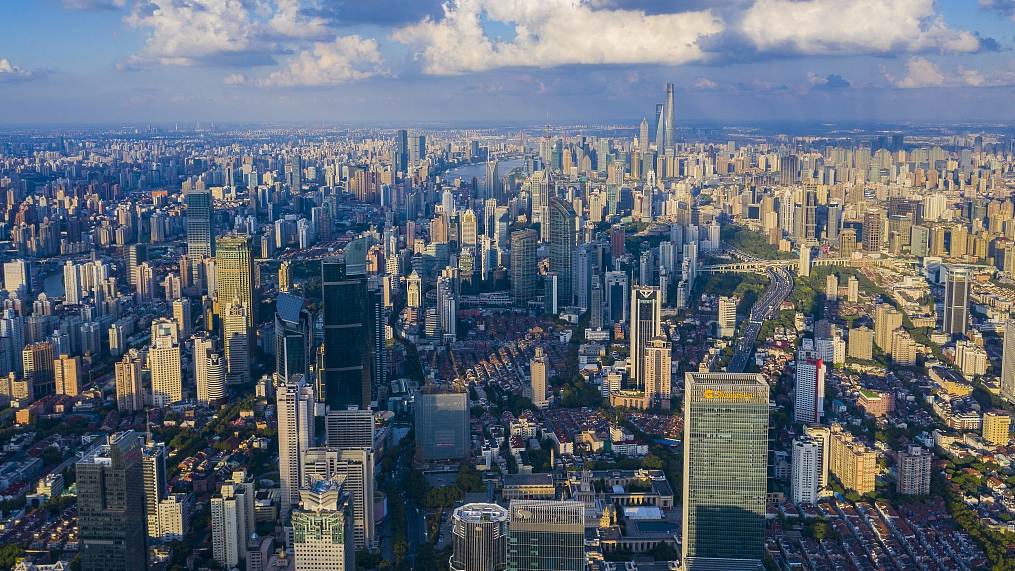
Skyline of Shanghai File photo: VCG
Shanghai's per capita GDP, a broad measure of living standards, reached 135,000 yuan ($20,136) in 2018, exceeding the threshold ($20,000) of a developed economy for the first time, according to figures released by the Shanghai Municipal Statistics Bureau over the weekend.

Experts said the figure shows that Shanghai's social development is close to that of developed areas, and the city, with the central government's policy support as well as resilience in its economy, is expected to rise as a global financial center.

"Amid China's efforts to shift from quantity-led to quality-driven growth in the past several years, the city still recorded steady gains in both economic growth and overall social well-being," Liu Xuezhi, a senior expert in macroeconomics at the Bank of Communications, told the Global Times on Sunday.

The city's GDP stood at 3.27 trillion yuan ($480 billion) in 2018, surpassing Thailand's 2017 GDP of $455 billion. Thailand is the eighth-largest economy in Asia. 

Overall, its GDP grew 6.6 percent in 2018, compared with 6.9 percent in 2017, while keeping pace with China's 6.6-percent GDP growth.

Liu noted that besides per capita GDP, other factors such as the city's economic structure, efficiency and technological innovation are also important indicators of development. The increasing share of the tertiary industry in Shanghai's economy also shows a high-quality growth trend.

The tertiary sector was the largest contributor to the city's GDP last year, accounting for 69.9 percent of the total. Value added in the primary industry sector dropped 6.9 percent, while growth in secondary industry was 1.8 percent and the growth in tertiary industry was 8.7 percent, according to the municipal statistics bureau.

Financial center

The city also aims to become a global financial center by promoting reform and innovation in the financial sector, attracting top talent, and optimizing the legal environment in line with international rules, according to experts.

"Basic infrastructure facilities in Shanghai are already enough for it to become a financial center. But its soft power, including  attractiveness to talent and foreign capital, still lags behind major global financial centers like New York and London. These are areas where Shanghai really needs to catch up," an industry observer surnamed Dong told the Global Times on Sunday.

As of the end of April 2018, total assets of foreign banks in Shanghai reached 1.5 trillion yuan, accounting for 10.3 percent of total assets of Shanghai's banking institutions, according to the Xinhua News Agency.

"Unlike other financial centers, high-end manufacturing, such as shipbuilding, still accounts for a large share of Shanghai's GDP. This could help it better confront financial risks in the future," Dong said.

Dong said that although Shanghai's GDP is leading Chinese cities, its per capita GDP is still lower than expected when compared with its domestic counterparts, and there's much scope for growth.

According to a report from Yicai.com on Sunday, Shanghai is not the first Chinese city to move into the developed economy club in terms of per capita GDP. So far, 15 Chinese cities have achieved per capita GDP figures in excess of $20,000.

Shenzhen in South China's Guangdong Province ranked top in the list with per capita GDP of 193,338 yuan, and Hangzhou in East China's Zhejiang Province (at 142,683 yuan) and Nanjing in East China's Jiangsu Province (at 153,814 yuan) had higher per capita GDP figures than Shanghai.


By Shen Weiduo Source:Global Times Published: 2019/3/3 21:03:40

Shanghai first Chinese city to top 3 trillion yuan GDP


By Zhou Wenting in Shanghai | China Daily | Updated: 2018-01-20 09:42
Skyscrapers are reflected in a puddle of water in the early morning at the Bund in Shanghai, Oct 20, 2015.[Photo/Xinhua]
Shanghai became the first city in China, the world's second-­largest economy, to top GDP of 3 trillion yuan ($469 billion) and achieved higher-than-­expected growth last year, official data revealed on Friday.
The municipality achieved 3.01 trillion yuan in GDP in 2017, for year-­on-­year GDP growth of 6.9 percent, which corresponded with that of the previous year and last year's national average, according to the Shanghai Municipal Statistics Bureau.
"As an early bird of the nation's economic restructuring, such figures embody the standard and quality of Shanghai's steady economic growth, as well as its role in leading, radiating and driving the development of the Yangtze River Delta and its surrounding areas," said Tang Huihao, the bureau director.
"Reaching 3 trillion yuan marked a significant milestone and a new starting point, from which we will pursue high­-quality development and elevate the core competitiveness of economic growth to achieve stable, healthy and sustainable development," he said.
The growth seen last year was partly driven by the coordinated development of the manufacturing and service industries, for which growth came in at 5.8 percent and 7.5 percent, respectively.
"Industrial production recorded its fastest growth since 2011 and the industries of high-­tech manufacturing and strategic emerging manufacturing manifested eye-­catching growth," Tang said.
Both production and sales of new energy vehicles soared, with gross industrial output increasing by 42.6 percent over the previous year. Tang attributed the upswing mainly to the government's green car subsidies, favorable license policies and a small original market size.
Manufacturing of medical equipment increased 11.2 percent year-­on-­year, which was also remarkable, Tang said. "A large number of innovative pieces of medical equipment emerged last year, breaking the monopoly of imports from foreign countries."
Sun Lijian, an economics professor at Shanghai­-based Fudan University, said such strong figures showed the city's powerful economic development momentum, under both the influence of the visible hand of the government and the invisible hand of the market from supply-­side structural reform.
"I also hope Shanghai can lead the country in exploring a successful model of the government and the market exerting a synergetic influence to create more products and services that the public will not only applaud but also buy," he said.
The city's statistics bureau said the real estate market in Shanghai had cooled last year and prices remained stable thanks to precise regulation. Real estate development investment growth in 2017 was 2.9 percentage points lower than in 2016, with market turnover shrinking as well.

Lujiazui targets becoming high-end financial leasing hub

1a.jpg
Dawn breaks over Lujiazui Financial District in Shanghai on March 7, 2017. [Photo/VCG]
Lujiazui, Shanghai's financial city, is ambitious to become a high-end financial leasing hub by improving its services and supporting its facilities and business environment.
The area, with an abundance of financial market factors and financial infrastructure such as licensed institutions and professionals, is driving development of the financial leasing industry.
Ping An International Financial Leasing Co, located in Lujiazui, has become an industry leader with only six years of development. Its total assets exceed 230 billion yuan ($33.34 billion).
Li Wenyi, the company's deputy general manager, considers that its rapid development can largely be attributed to Lujiazui's good business environment.
Li spoke highly of Lujiazui's fundraising environment for the financial leasing industry and said that it is easy for the company to integrate various financial resources.
Lujiazui is home to 13 state-level factor markets, 850 licensed financial institutions accounting for 60 percent of the city's total, 19 foreign-funded banks such as HSBC and Citibank, 6,000 emerging financial institutions, and over 3,000 professional service agencies.
Authorities at the Lujiazui Management Bureau say that the area is working hard to reach its goal of becoming a high-end financial leasing hub.
It hopes to be the home of the China Financial Leasing Industry Association, which is still in the planning stage but is expected to strengthen the industry's discipline and promote its healthy development.
Lujiazui also joins hands with industry organizations and third-party institutions to organize forums and symposiums, and supports training programs for financial leasing brokers.
It is guiding local state-owned enterprises and social capital sources to set up a financial leasing industry fund to help small and medium-sized enterprises solve fundraising difficulties.
Moreover, it gives financial support to leading financial leasing companies to encourage them to build professional service platforms, and has encouraged the Shanghai United Assets and Equity Exchange to cooperate with related institutions to build a trading platform.
Thanks to those measures, Lujiazui has attracted over 200 financial leasing enterprises and nearly 1 trillion yuan. Five of those companies have assets exceeding 100 billion yuan, and three rank among China's top 10 financial leasing companies.

FTZ reform benefits more businesses


The separation of business licenses and administrative approvals in the China (Shanghai) Pilot Free Trade Zone has benefited a growing number of businesses, such as fresh products delivery in new retail, vocational training, medicines from lab to shelf, cosmetics imports, registration of medical devices and the qualification of construction enterprises.
Amid the reform, the number of new taxpayers (business entities) in Pudong increased by 29 percent in 2017, compared to the end of 2015.
The registration process for the establishment of an enterprise in the free trade zone now takes two days at most.
The first-time import of non-special use cosmetics — defined as make-up, hair, skin and nail care products, and perfume — is now subject to record filing that replaces the previous registration and approval system with the time required shortened from three to six months to three to five business days.
The number of applications for construction enterprise qualification in 2017 and 2018 has increased by 144 percent and 111 percent respectively compared to 2016.
The State Council has decided to promote the reform nationwide.
At the same time, a new management approach, mainly the in-event control and subsequent monitoring, is being improved. A government comprehensive monitoring system has been established to ensure the sharing of information among registration, licensing, monitoring and law enforcement departments which involves 21 government agencies in the free trade zone and 108 business sectors.
The free trade zone also optimizes its services and is dedicated to building an all-in-one online platform to facilitate company applications and registration.
The platform, which went online in March, can cope with all 327 business-related matters in the free trade zone. About 53 percent of these can be approved online. The time taken on average has been shortened from 22 to 3.3 working days.
Institutional innovations have inspired entrepreneurship.
More than 57,000 new enterprises have registered in the free trade zone since it was established five years ago. Nearly a fifth of these new firms are foreign-invested involving US$25 billion of investment.

A new lease of life for transport


More airplanes and ships will be available in the city’s free trade zone for financial leasing after a one-stop service platform was established Thursday.
Ten companies, including China Eastern Airlines, China Southern Air Leasing and China Development Bank Leasing, signed cooperation agreements with the Shanghai Pilot Free Trade Zone and Lujiazui financial hub in the Pudong New Area.
The newly-established financial leasing industry development service center will integrate providers and government departments to offer a one-stop service to financial leasing companies.
The service will expand to the Yangtze River Delta.
Pudong also released a new set of policies yesterday. They include simplified procedures in leasing of imported planes and awarding money to financial leasing companies in fields of aviation and key equipment.
By the end of September, 1,804 financial leasing parent companies have registered in Pudong.

One-stop clearance smooth import, export path


Shanghai Customs is striving for a better China (Shanghai) Pilot Free Trade Zone with measures like unifying entry-exit and quarantine measures to provide one-stop services for companies and simplifying procedures.
Integration of inspection and quarantine has cut the time companies spend on customs clearance from two to three days to only six to 10 hours.
MicroPort Scientific Corporation, a local medical device developer and manufacturer, is among the beneficiaries. MicroPort concentrates on research and development of cardiac valves. The major material — bovine pericardium — is transported to Shanghai from Australia by air.
Bovine pericardium has to be delivered within 72 hours, or function and quality are impaired.
After local customs was informed, officers made early preparations, set plans and gave quick check to allow the tissue to go through customs faster. Now the whole process from Australia to MicroPort's warehouse takes less than 60 hours.
Wang Yaomin with the company, said the improved service for MicroPort reduced losses during customs clearance. The quality of their products has risen while costs have fallen. "We used to spend three to four days on customs declarations," Wang said.
MicroPort's cardiac valves are now in the clinical stage and may be available to patients next year.
Zhangjiang Cross-border Science Innovation Supervision Service Center has a direct path for cargo arriving by air. Air cargo can be taken directly to Zhangjiang for one-stop clearance. The special materials for lab use often require quick processing and no longer need wait at the airport for checks.
Yu Xiang, a customs officer at the center, said the process can be very fast when the quarantine risk is controllable. He and his colleagues also provide consulting services for Zhangjiang companies.
Another measure is classified supervision in one place. Previously, "bonded" and "non-bonded" goods were stored in separate warehouses, which raised storage costs. Now, companies' bonded and non-bonded goods can be stored in one warehouse in the free trade zone.
Yuan Jieying, an executive with Shanghai Origin Supply Chain Management Company, said management efficiency has risen by more than 30 percent with a single storage system, management system and a warehouse, greatly increasing the company’s market competitiveness. Costs were cut by 10 percent.
Origin now handles customers like Australia's Metcash, Germany's Oldenburger and JD.com. Many foreign enterprises have also chosen Origin’s warehouse in the Yangshan Deep-Water Port bonded zone as their Asia-Pacific distribution center.